%20(3).png)
Learning to drive can be an exciting step towards greater independence. For some people with limb difference, driving may be something they've always known they wanted to do. For others, a change in circumstances or limb loss may mean finding a new way to interact with a vehicle.
A note from Nicole
Mobility in Motion were one of the first companies to believe in what LimbMatch is building. Before we had users, before we had data, they put their name behind the platform. This article is written by their team. I have read it, I trust it, and I think it answers questions a lot of people in this community have been quietly googling for years. If you are navigating driving with a limb difference: whether you are newly adapting, thinking about changing your car, or just wondering what is actually possible - this is a genuinely useful place to start.
Nicole Brennan, Founder, LimbMatch
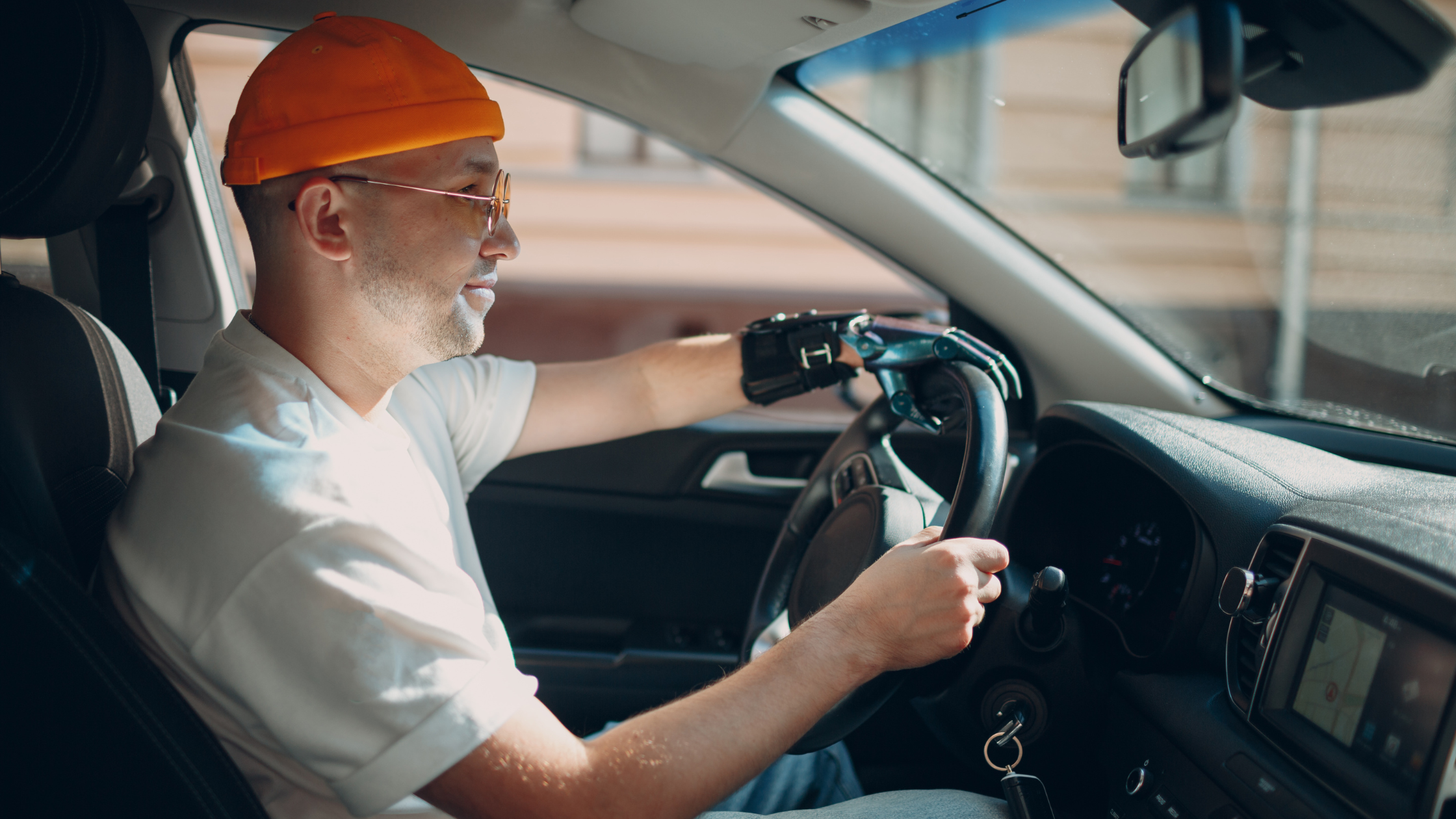
Whatever your journey, you don't necessarily need to drive a completely different type of car. Vehicle adaptations can change the way you operate a vehicle, helping you find a setup that works around your individual needs.
At Mobility in Motion, we specialise in vehicle adaptations for drivers and passengers with a wide range of mobility requirements. As a sponsor of LimbMatch, we're pleased to introduce some of the options that may be relevant if you're living with limb difference, limb loss or using a prosthesis.
What are vehicle adaptations?
Vehicle adaptations are modifications or additions that can make a car easier to drive, access or use.
They don't all involve major changes to a vehicle. Some are relatively simple solutions that change the way you operate a particular control, while others can help with getting into the car or transporting mobility equipment.
The important thing is that there isn't one adaptation designed for everyone.
Your requirements might be influenced by your limb difference, whether and how you use a prosthesis, your strength and range of movement, which controls you can comfortably operate, and whether you're driving or travelling as a passenger.
That's why an assessment with an adaptation specialist can be so useful. Rather than trying to work out which product you need from a list, you can discuss how you currently use a vehicle, or how you'd like to use one, and explore solutions around you.
Driving adaptations for limb loss or limb difference
For some drivers with limb difference or limb loss, the biggest consideration may be how they operate the pedals, steering wheel or other controls. Depending on your individual circumstances, adaptations can include:
Hand controls
Hand controls can allow you to operate the accelerator and brake using your hands rather than your feet. For someone who cannot comfortably use one or both foot pedals, this can provide an alternative way to control the vehicle. There are different styles of hand control, so the position and operation can be considered around the driver's requirements.
If you're sharing your vehicle with another driver, many hand-control systems are also designed with this in mind. Certain systems leave the standard pedals available for another driver, while quick-release accessories can help prevent accidental pedal operation when the hand controls are being used.
Left-foot accelerators
If using the accelerator with your right foot isn't practical or comfortable, a left foot accelerator can provide an alternative.
These systems position the accelerator on the left side of the footwell, allowing the driver to use their preferred foot.
Depending on the system, it may also be possible to switch between left and right foot accelerator configurations. This can be particularly useful in a shared vehicle.
Steering aids
Steering aids can make it easier to control the steering wheel if gripping or turning the wheel in the usual way is difficult.
A steering ball, for example, can provide a convenient point of contact for the hand.
Other secondary controls can bring frequently used vehicle functions, such as your indicator, lights, wipers, horn etc. closer to the driver's preferred hand position. The important question isn't simply “Which adaptation do I need?” but “What would make driving easier and more comfortable for me?”
If you have an upper limb difference and want to hear first-hand how driving adaptations can work in practice, Nicole Brennan, LimbMatch founder, shared her own experience in this vlog. Watch it here.
Your prosthesis and your car need to work together
For prosthetic users, choosing a vehicle adaptation isn't necessarily just about the vehicle. It's also about how you interact with the vehicle and your prosthesis.
You might find that getting into the driver's seat is straightforward but operating the pedals isn't comfortable. Or perhaps you can drive using the standard controls but find that a particular movement is tiring or difficult.
You may also prefer to drive with or without your prosthesis, depending on the activity, journey or individual circumstances.
These are all useful things to discuss during an adaptation assessment. The aim is to find a solution that fits into your everyday routine rather than expecting you to completely change the way you use your prosthesis or vehicle.
What if getting into the car is the difficult part?
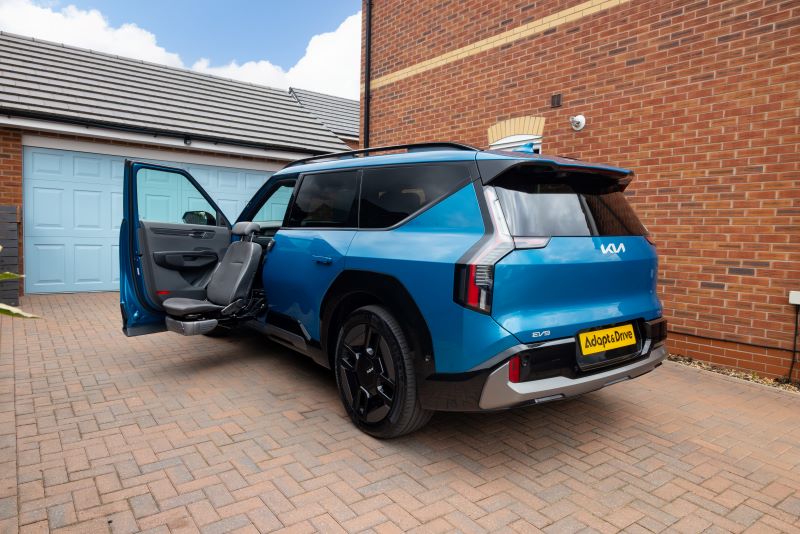
Not every adaptation is about driving. For some people with limb difference or limb loss, getting into or out of the vehicle may be difficult or uncomfortable. There are several access solutions that can help.
Swivel seats
A swivel seat can rotate towards the open door, bringing the seat closer to you and reducing the amount of twisting or movement needed to get into the vehicle. For some people, this can make transferring into the car more straightforward and comfortable. Some swivel seats can also lower or raise as they rotate. This can be useful particularly for wheelchair users when there is a significant difference between the height of a wheelchair and the vehicle seat.
Transfer plates
Transfer plates provide a stable platform to aid transferring in and out of a vehicle. They provide that extra support and confidence to get seated, and support different levels of mobility.
Person hoists
A person hoist is a lifting device designed to safely transfer someone from a wheelchair into a vehicle seat using a supportive sling. This transfer method removes any physical lifting required from a carer, helping to make transfers safer and more comfortable. The right solution depends heavily on the individual, so professional assessment is important.
You don't necessarily need a specially built car
One common misconception is that needing an adaptation means you need a completely different or specialist type of vehicle. That's not necessarily the case. Many everyday cars can accommodate adaptations, although compatibility varies between vehicles and individual requirements. The best car for one person may not be the best car for another. A vehicle's seat position, door opening, interior space, controls and boot can all affect whether a particular adaptation is suitable.
This is why we'd always recommend checking compatibility before buying a vehicle if you think you may need an adaptation.
What if you're thinking about changing your car?
If your current car no longer works as well as you'd like, you may be considering replacing it. Perhaps you're learning to drive and looking for your first car. Maybe you're moving to a larger vehicle for family life. Or perhaps your requirements have changed and you want to explore what's available.
Traditionally, you could buy a car and then arrange for an adaptation to be fitted, or look for a used vehicle that's compatible with your requirements. But there's another option that people may not have come across before.
Introducing Adapt & Drive
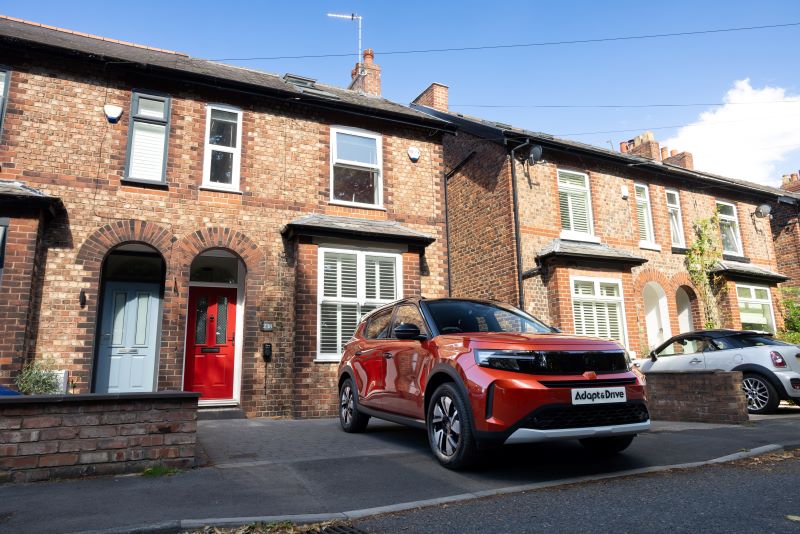
At Mobility in Motion, we created Adapt & Drive to make it easier to consider the vehicle and adaptation together.
The scheme enables customers to own a brand-new adapted car, with selected vehicles chosen with accessibility and adaptation requirements in mind.
One of the key features is access to exclusive manufacturer discounts. Depending on the vehicle, adaptations and individual circumstances, these discounts can offset, and in some cases exceed, the cost of the adaptations.
That means it's worth looking at the complete cost of a new adapted vehicle rather than assuming that buying a new car and adding adaptations will automatically be more expensive. This scheme is open to anyone and is designed as another route or people who want to own a new adapted vehicle.
A real example of what's possible
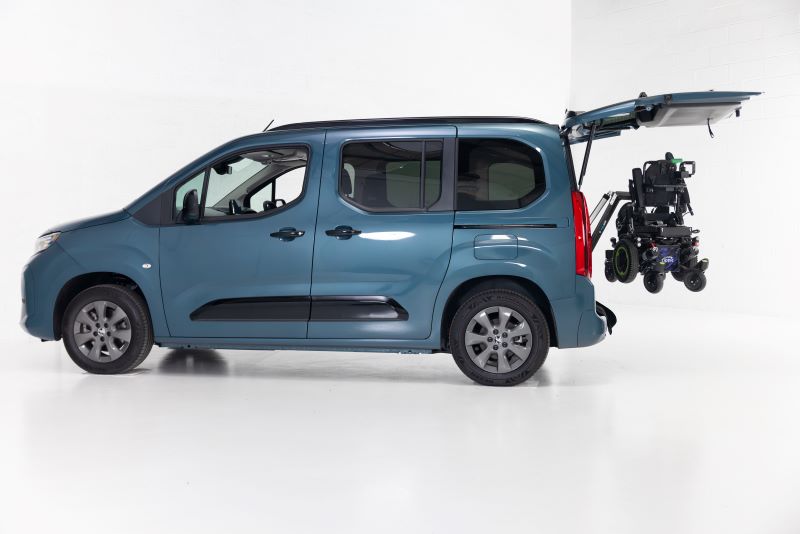
One of our customers, Dannie, chose a brand-new Vauxhall Combo Life Ultimate EV through Adapt & Drive.
His vehicle was fitted with a Smart Lifter LP boot hoist, helping him load his daughter’s wheelchair.
By choosing the vehicle and adaptation through Adapt & Drive, Dannie saved £7,091.66 compared with traditional
purchasing routes.
He also benefited from having a brand-new vehicle with a full manufacturer warranty. Individual savings will vary depending on the vehicle specification, adaptations required, available promotions and VAT exemption status, but Dannie's experience shows why it can be worthwhile looking at the whole vehicle package when you're considering your next car.
Read Dannie’s full Adapt & Drive story
Finding a solution that works for you
Everyone's experience of limb difference and limb loss is different, and the same applies to driving.
Some people may never need a vehicle adaptation. Others may benefit from a relatively simple change to their vehicle, while some may need a more comprehensive driving or access solution.
Whether you're learning to drive for the first time, continuing to drive with a limb difference, adapting to a change in your circumstances, making it easier to get in and out of the car, or finding a new vehicle that fits around your life, there may be an adaptation that can help.
At Mobility in Motion, our role is to understand your individual requirements, check vehicle compatibility and help you explore the available options.
And if you're considering a new car, Adapt & Drive gives you another route to explore, bringing the vehicle and adaptations together and giving you access to exclusive manufacturer discounts on selected vehicles.
For LimbMatch readers, we hope this is a useful introduction to what's possible.
You can explore more about Mobility in Motion and Adapt & Drive, or speak to our team if you'd like advice about a particular vehicle or adaptation.
There's no need to have all the answers before you get in touch. Sometimes, the first step is simply finding out what could work for you.